


Preventive examinations, standard gynaecological examination, colposcopy and Pap test, analysis of vaginal secretions and cervical and vaginal swabs, gynaecological ultrasound examination using vaginal and abdominal probes on a 2D/3D/4D colour Doppler ultrasound machine; diagnosis and ultrasound monitoring of pregnancy during the first, second and third trimesters, expert ultrasound examination, non-invasive prenatal diagnosis – double and triple tests, a prenatal test that is an alternative to amniocentesis and double and triple tests, pregnancy monitoring; expert ultrasound examination during pregnancy; treatment of gynaecological conditions and infertility; biopsies of pathological changes; exploratory curettage, cervical biopsy, with LOOP radiofrequency excision or cervical conisation performed if indicated by the histopathology findings; polypectomy, removal of genital warts, incision of a Bartholin's gland abscess, insertion and removal of an intrauterine device, instrumental and medical termination of pregnancy, regenerative Cellular Matrix and PRP treatments after childbirth, for pronounced scarring and vaginal dryness, occasional stress incontinence and other conditions.
The health of a woman's reproductive organs is one of the most important factors of health that significantly affects overall health and population growth. Care of reproductive health is an imperative of modern medicine and is carried out in women of middle age, pregnant women, women in peri- and postmenopause, in adolescents and children.
In Poliklinika Živanović a large number of diagnostic examinations and procedures, surgical interventions and laboratory analyses that are part of the monitoring of reproductive health, but also the treatment of various gynaecological diseases and conditions, can be performed.
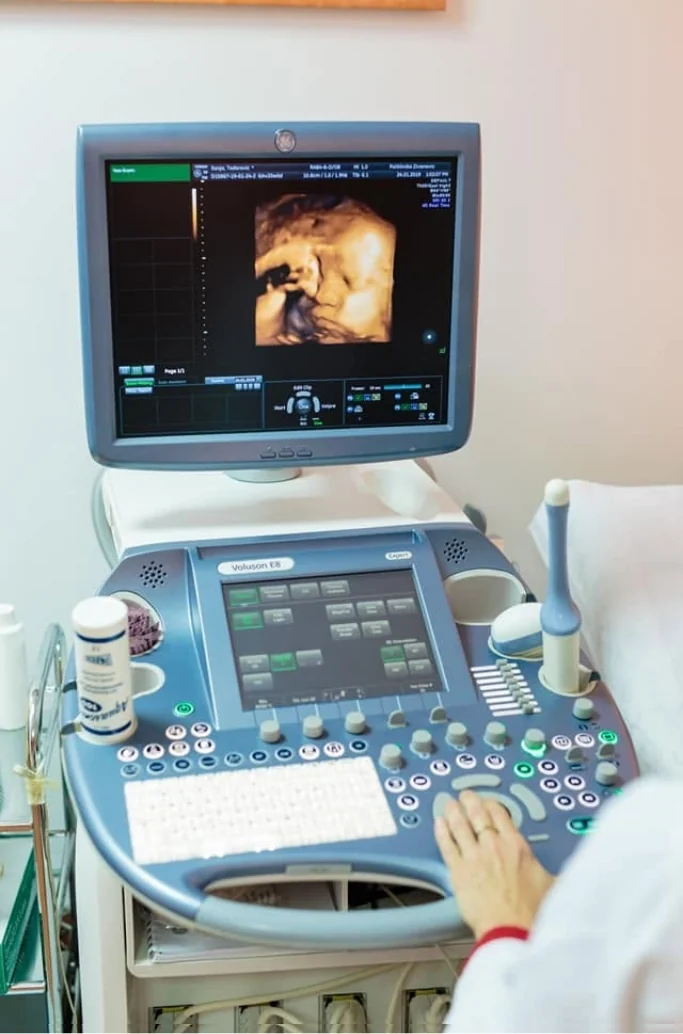
Standard gynaecological examination, colposcopy and Pap test, analysis of vaginal secretions and swabs of the cervix and vagina, ultrasound gynaecological examination with vaginal and abdominal probes on a 2D/3D/4D colour Doppler ultrasound device.
Also, diagnostics and ultrasound monitoring of pregnancy during the first, second, and third trimesters, expert ultrasound examination, non-invasive prenatal diagnostics – double and triple test, Prena test – which is an alternative to amniocentesis, double and triple test.
During the first trimester, an ultrasound examination determines the location and viability of the pregnancy, the number of foetuses and the estimated due date. The next examination takes place between the 12th and 14th weeks of gestation, when foetal nuchal translucency is measured and concentrations of biochemical substances in the pregnant woman’s blood are measured to help calculate the risk of chromosomal abnormalities. In the second trimester, ultrasound assesses foetal biometry, heart rate, foetal movements, the position and appearance of the placenta, the amount of amniotic fluid and cervical length.
Expert ultrasound examination in pregnancy includes: extended fetal biometry; measurement of the size and assessment of the appearance of brain structures (cerebellum, cerebral ventricles and blood vessels); appearance of the face; a detailed heart examination (four-chamber and five-chamber views, the septa between the ventricles and between the atria, and the origins of the major blood vessels – the aorta and pulmonary artery).
Performed in the third trimesterfetal biometry, fetal position, fetal heart action, fetal movements, appearance of the placenta, amount of amniotic fluid, length of the cervix.
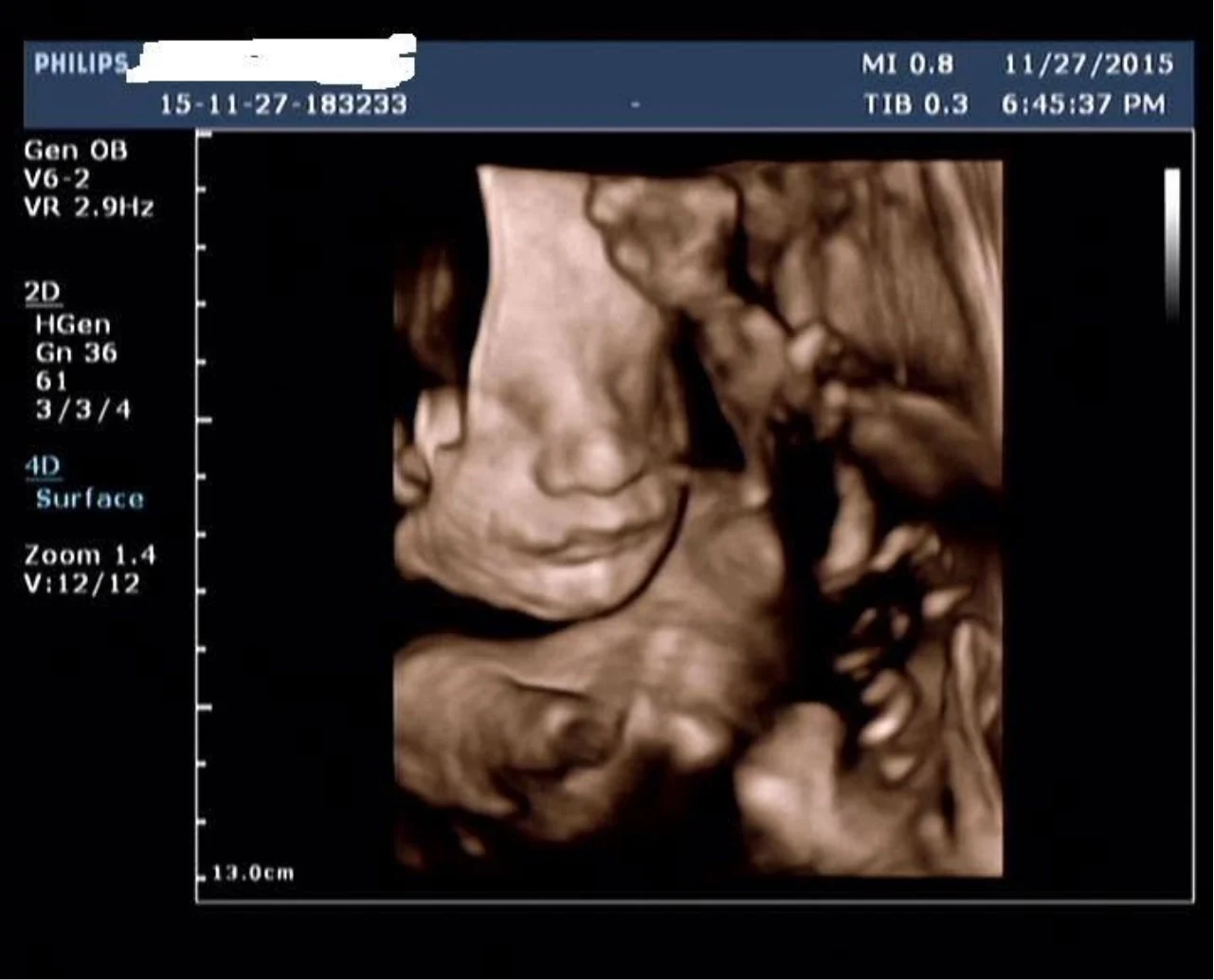
Modern ultrasound devices can display the fetus in three dimensions and over time, as a fourth dimension – real time. These examinations are recorded, and every patient receives a video recording of the examination and/or photographs of the baby.
After taking the medical history and performing gynaecological and ultrasound examinations, the patient can receive appropriate advice on methods and means of preventing unintended pregnancy – contraception.
Regular gynaecological examinations can prevent cervical cancer or detect it at an early stage, when the disease is completely curable. Primary prevention includes counselling and use of the “Gardasil” or “Cervarix” vaccine (available on the local market), which are almost 100% effective against human papillomavirus types 16 and 18, responsible for 70% of cervical-cancer cases. Secondary prevention includes colposcopy and a PAPA smear and, when necessary, HPV typing, biopsy of suspicious cervical changes, exploratory curettage of the cervical canal and histopathological analysis. A PAPA smear is a cytological examination of a cervical smear, examined microscopically by a pathologist; the smear is taken and the findings interpreted by a gynaecologist.
If histopathology findings indicate it, a LOOP radiofrequency excision or cervical conisation is performed. The intervention is conducted under local or general anaesthesia, lasts several minutes, and the patient is able to carry out daily activities the same day. The tissue sample obtained is sent for histopathological examination.
In the prevention, diagnosis, and treatment of other gynaecological diseases and conditions, a range of other surgical interventions are performed, such as:
Exploratory curettage - intervention performed when it is necessary to analyse the endometrium or endocervix in order to establish a definitive diagnosis in cases of prolonged bleeding, postmenopausal bleeding and so on, but also in all insufficiently clear situations. The intervention is performed under local and general anaesthesia and lasts about 15 minutes.
Cervical biopsy– An intervention in which a small tissue sample is taken from suspicious areas of the cervix, previously detected by colposcopic and Papanicolaou examinations.
Polypectomy - represents an intervention by which a polyp is removed from the canal of the cervix.
Removal of condylomas– The decision on how to remove condylomas is made on the basis of their appearance, position and distribution. They may be removed with medicines, surgically, by electrocautery or radio waves.
Incision of Bartholin's gland abscess - treatment consists of incision and draining of the purulent content from an abscess that arises as a consequence of inflammation. The intervention can also be performed under general anaesthesia.
Insertion and removal of the spiral – An intrauterine device is inserted during menstrual bleeding.
Instrumental and medical termination of pregnancy - intervention carried out at the patient's request, provided the pregnancy is not older than ten weeks. The intervention is performed under local or general anaesthesia, lasts about 15 minutes, and requires preparatory laboratory analyses, as well as an ultrasound examination to determine the age of the pregnancy.
Infertility represents the inability to conceive during one year of regular, unprotected intercourse. Almost equally prevalent in men and women (from 30% to 40%), this condition is caused by numerous factors.
In Poliklinika Živanović examination of the causes of male and female infertility is carried out, after which appropriate treatment is recommended-ultrasound folliculometry after ovulation stimulation or in a spontaneous cycle, insemination and monitoring of biochemical pregnancy parameters.
Doctors
 prof. dr sci. med. Aleksandar ŽivanovićSpec. gynaecology and obstetrics
 prof. dr sci. med. Marija ŠorakSpec. gynaecology and obstetrics
 prof. dr sci. med. Petar ArsenijevićSpec. gynaecology and obstetrics
 dr Srđan MujkovićSpec. gynaecology and obstetrics
 dr Aleksandar MaračićSpec. gynaecology and obstetricsass dr Neda ArsenijevićSpec. gynaecology and obstetrics
 dr Ana Nenadović ŽivanovićSpec. gynaecology and obstetrics
 dr Aleksandar ŽunićSpec. gynaecology and obstetrics
 dr sci. Tanja NovakovićCytogeneticist