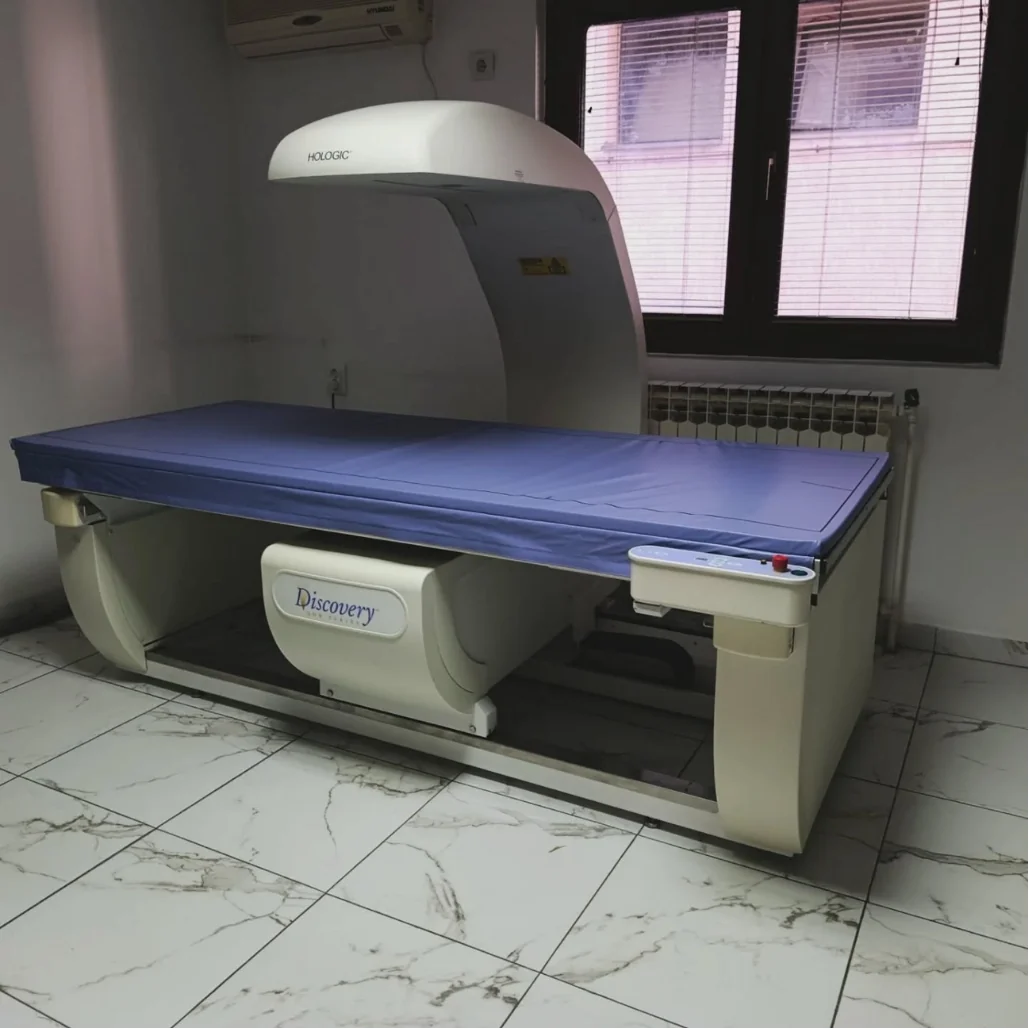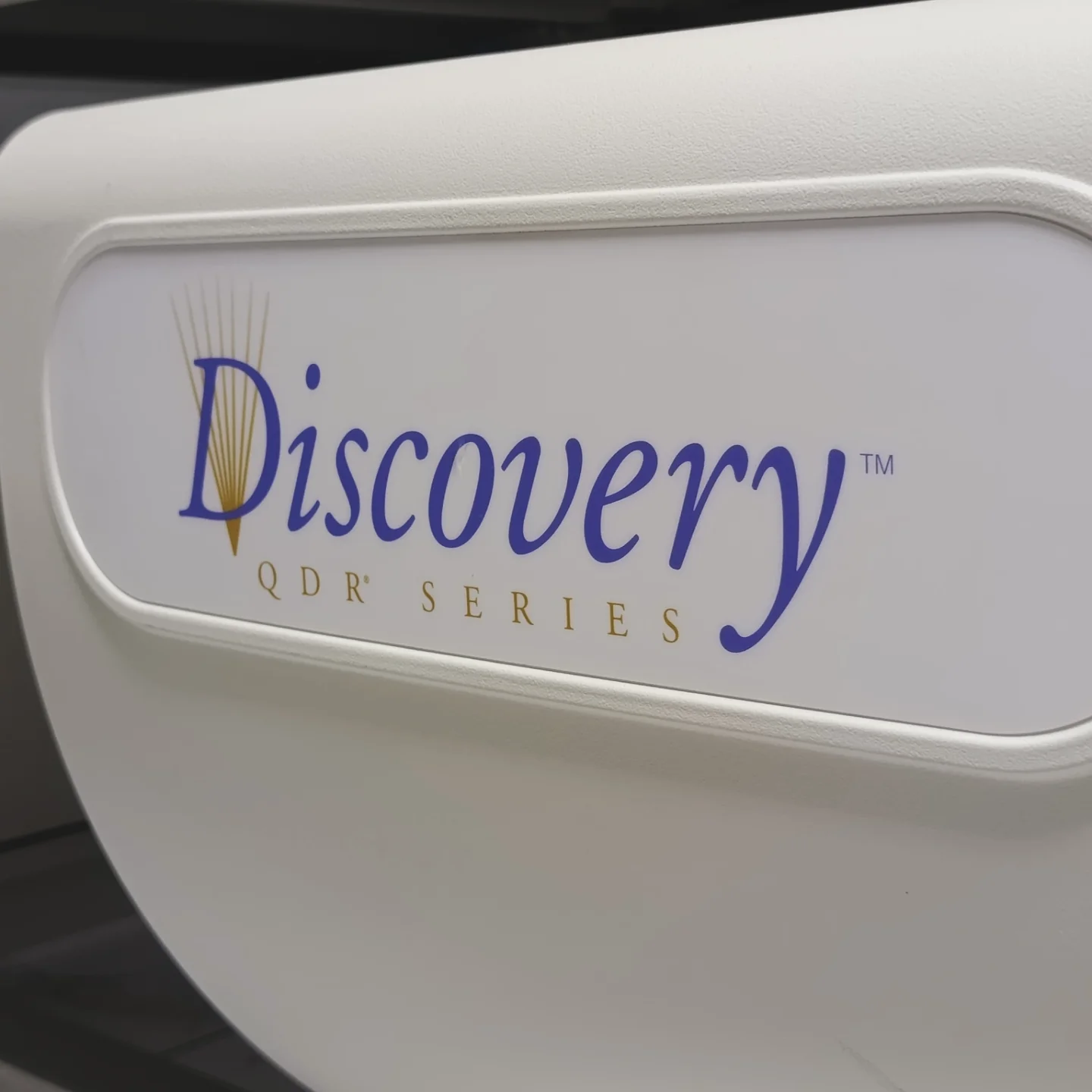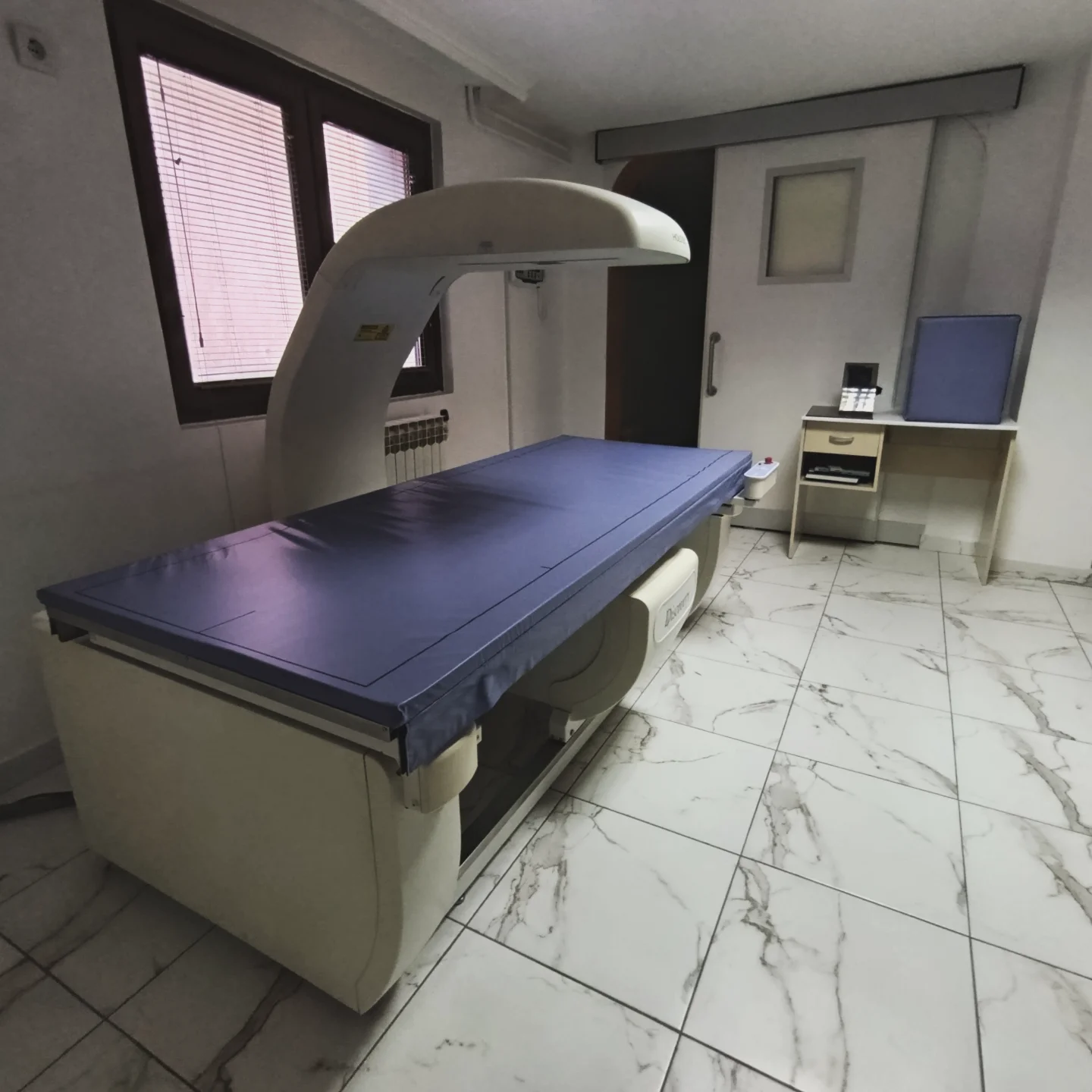


At Poliklinika Živanović in Kragujevac, DXA diagnostics are performed on a Hologic Discovery™. Available services include bone mineral density measurement, TBS analysis and Whole Body body composition analysis.
DXA, also known as DEXA or bone densitometry, uses a low dose of X-ray radiation to measure bone mineral density. The examination helps diagnose osteoporosis and assess fracture risk, and follow-up measurements may contribute to monitoring treatment.
What does a DXA examination show?
Bone mineral density measurement is abbreviated as BMD (bone mineral density). The lumbar spine and hip are most commonly imaged to assess osteoporosis. The measurement site and interpretation of findings depend on the clinical situation.
Reduced bone density may be present even without symptoms. Therefore, the decision to have an examination should be based on a doctor's assessment, together with information about previous fractures, illnesses, treatment, and other risk factors.
T-score and Z-score — how is the report read?
T-score compares measured bone density with reference values for young adults. It is used primarily in postmenopausal women and men aged 50 and over.
Z-score compares the finding with an appropriate reference group by age and sex. It is particularly important for premenopausal women and men under 50.
The doctor interprets these values together with other clinical information; the number on the report alone does not determine the overall treatment plan.
TBS analysis — additional information alongside BMD
TBS (Trabecular Bone Score) is a computer-derived indicator based on the texture of a DXA image of the lumbar spine, providing indirect information about bone microarchitecture. It is not a direct image of internal structure or an independent measurement of bone strength.
TBS complements fracture-risk assessment alongside BMD and clinical factors. It is not used independently to make a treatment decision.
Whole Body body composition analysis
A Whole Body examination provides information on total and regional body composition: fat tissue, lean soft tissue, and bone mineral content.
Lean mass is not the same as directly measured muscle mass. The finding can complement an assessment of body composition, and the doctor explains its significance and the need for follow-up examinations.
Whole Body analysis and bone density examination have different aims. When booking, state whether you are coming for an osteoporosis assessment, body-composition analysis, or both examinations.
What does the examination and preparation involve?
During imaging, you lie on the examination table. The examination is non-invasive and usually painless; it is important to remain still so that the image can be used.
When booking, ask for instructions for the type of examination you are having. Inform the staff if there is a possibility of pregnancy or if you have recently had an examination with contrast media or radioisotopes. For a standard bone density measurement, it is generally advised not to take calcium supplements for at least 24 hours before the examination; check specific instructions with the clinic.
Bring previous reports if you have them. Preparation for Whole Body analysis may differ and should be coordinated with the staff's instructions.
Frequently asked questions
Are DXA and DEXA the same examination?
Yes. Both names refer to dual-energy X-ray absorptiometry, a method used to measure bone mineral density.
Does the examination use radiation?
Yes, it uses a low dose of X-ray radiation. Therefore, it is important to tell the staff in advance about pregnancy or the possibility of pregnancy.
Are TBS and Whole Body the same?
No. TBS complements the assessment of bone health, while Whole Body provides information about body composition.
Booking a DXA examination
For information about the DXA, TBS, and Whole Body examination, call 065-373-00-00, 069-373-00-00 or 034-373-000.
Poliklinika Živanović, 19 Bulevar Kraljice Marije, Kragujevac.