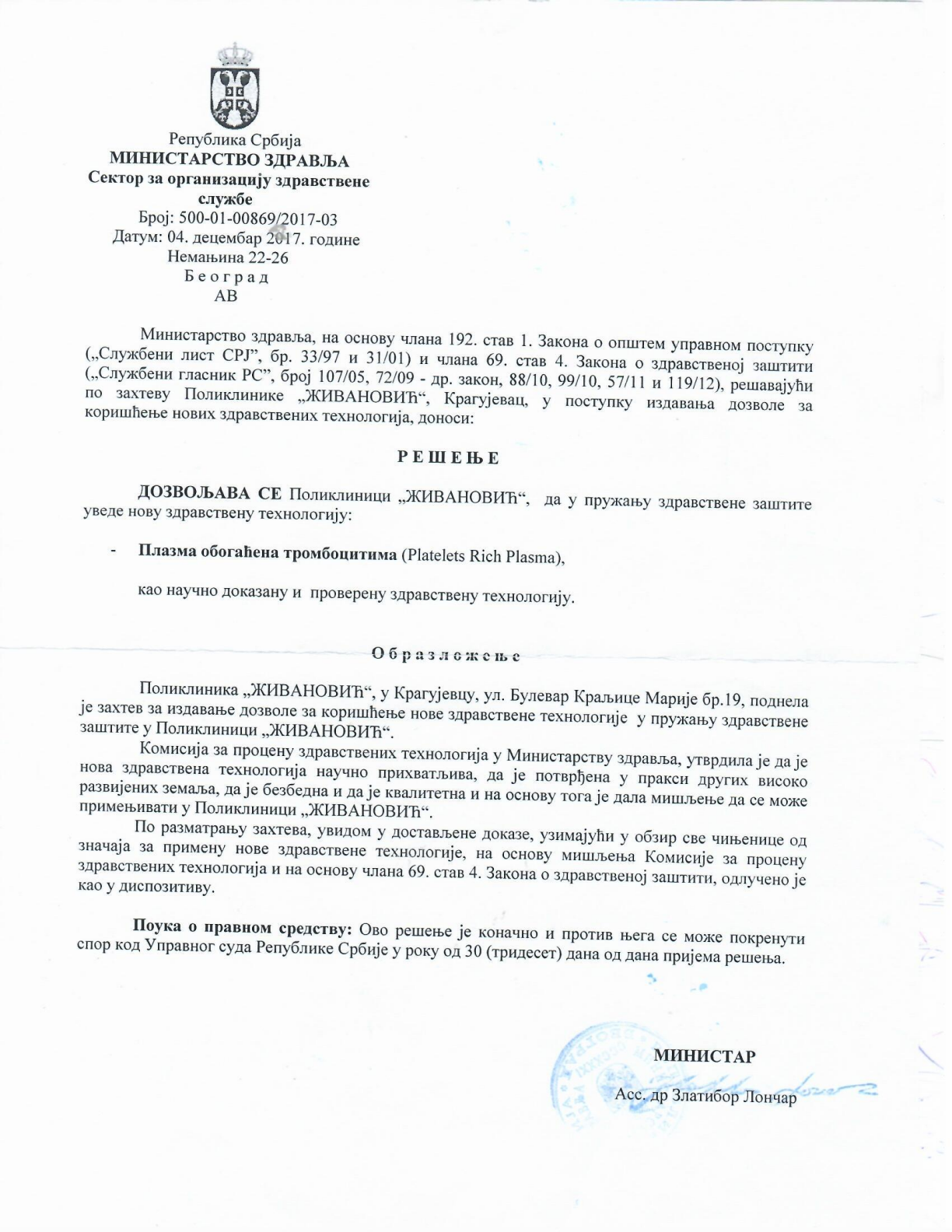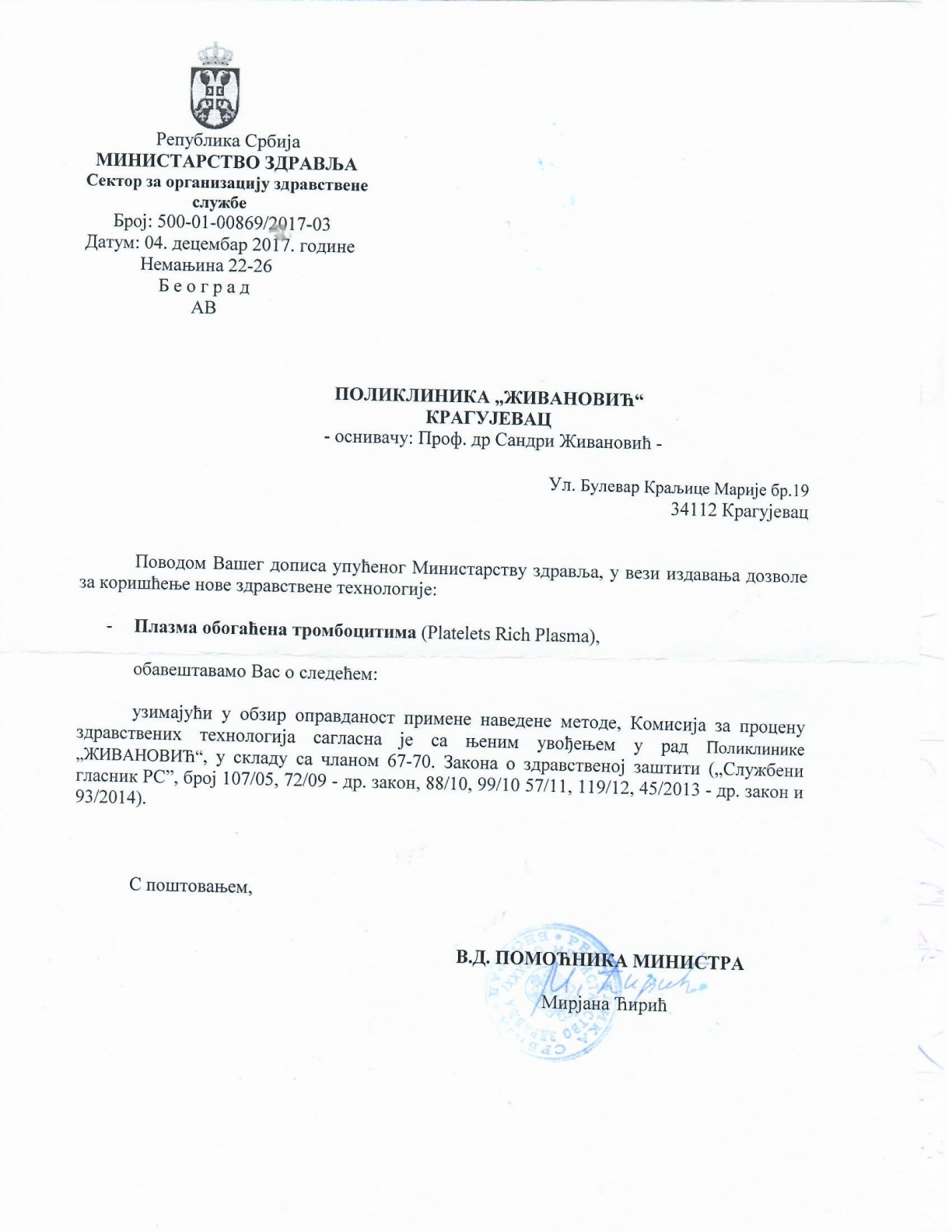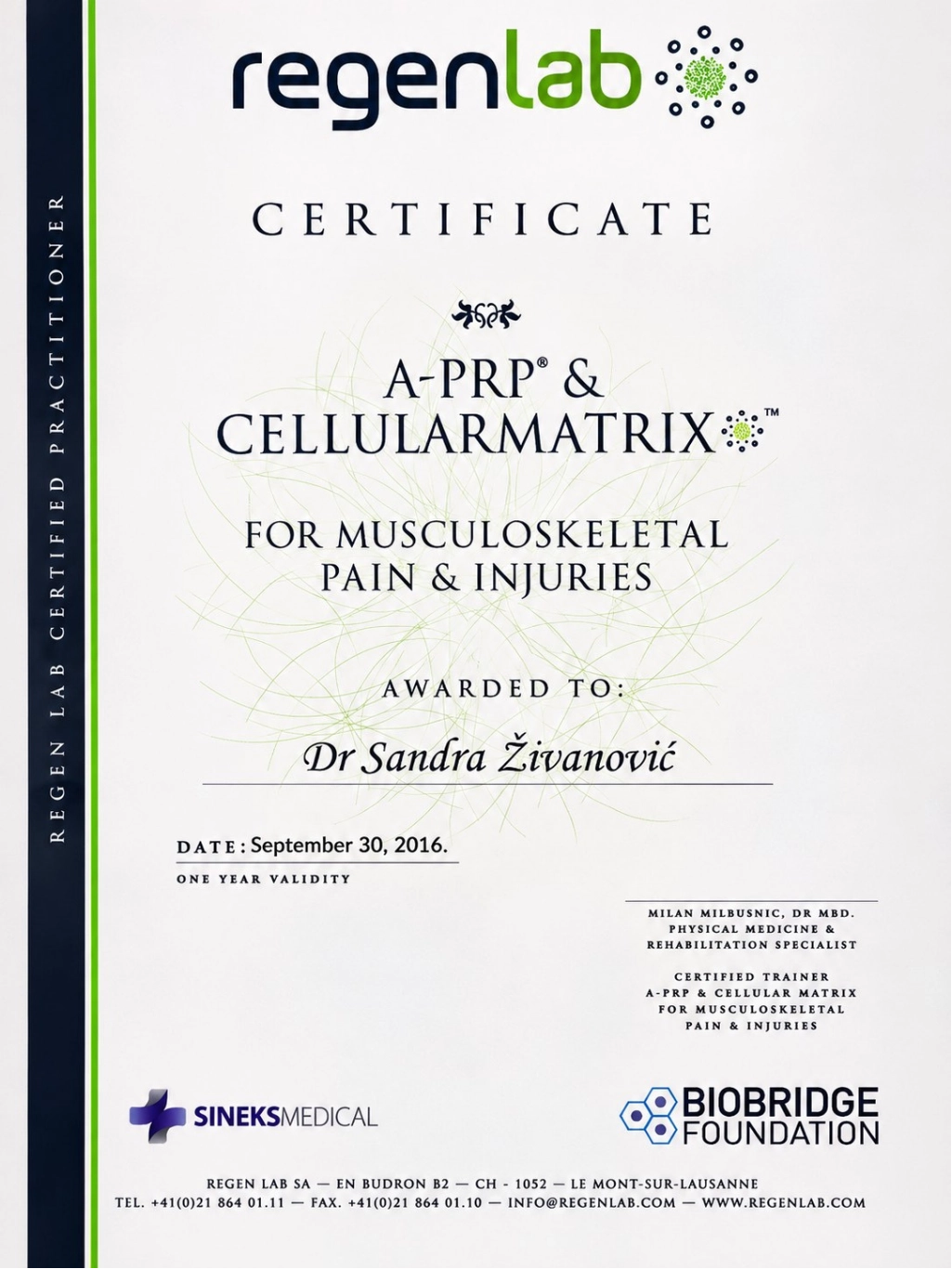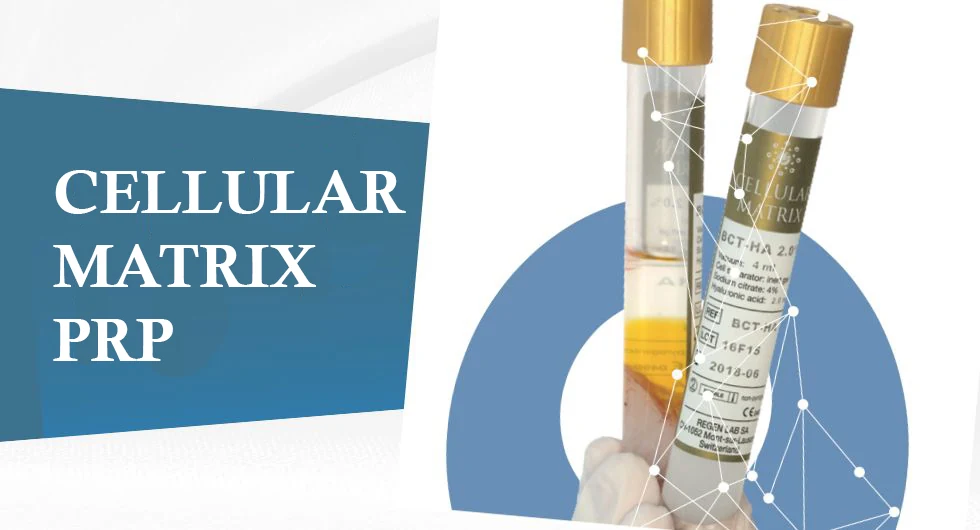


PRP therapy is a procedure that uses platelet-rich plasma prepared from the patient's own blood. At Poliklinika Živanović in Kragujevac, PRP is provided as a standalone service and is also an integral part of Cellular Matrix therapy, in which it is combined with hyaluronic acid.
Treatment selection begins with an examination and discussion with a doctor. The aim is to assess symptoms, expectations, and treatment options, then choose a procedure appropriate for the individual patient.
What is PRP and how is it prepared?
The abbreviation PRP comes from the English term platelet-rich plasma. Platelets are blood cells that, in addition to their role in blood clotting, contain growth factors important for healing processes.
A sample of the patient's blood is taken to prepare PRP. Centrifugation separates blood components and prepares platelet-rich plasma, which is then administered to the selected body area. The method of administration depends on the reason for treatment and the doctor's plan.
What is the difference between PRP and Cellular Matrix therapy?
| Procedure | What is used |
|---|---|
| PRP therapy | Platelet-rich plasma from the patient's own blood. |
| Cellular Matrix therapy | A combination of PRP and hyaluronic acid in a dedicated system. |
PRP and Cellular Matrix are therefore not two names for the same treatment. Their use, choice of body area, and procedure plan are determined after an examination. More detailed information about the combined procedure is available on the page Cellular Matrix therapy.
PRP, skin and hair
The use of PRP in skin and hair treatments is discussed after a dermatological examination. Skin changes, thinning hair, and hair loss can have different causes, so determining the cause is the basis for discussing treatment options.
The doctor assesses whether PRP, Cellular Matrix, or another approach is appropriate for the particular problem. The expected result and number of treatments are not the same for all patients.
PRP in gynaecology
Within regenerative and functional gynaecology, the choice between PRP, Cellular Matrix, and other procedures is based on an individual assessment. Vaginal dryness, painful intercourse, and symptoms after childbirth or during menopause require a gynaecological examination and determination of the cause.
These symptoms alone do not mean that PRP is an appropriate choice. The gynaecologist explains the available options, limitations of the evidence, possible risks, and alternatives for the specific condition. The treatment decision is made individually, without promises of cure or a guaranteed effect in advance.
What does attending treatment involve?
- Consultation and examination: discussion of symptoms, previous treatment, medicines you take, and expectations.
- PRP preparation: blood collection and processing of the sample by an appropriate procedure.
- Administration and instructions: administration according to the doctor's plan and an explanation of care and activities after the procedure.
The duration, need for local anaesthesia, number of visits, and interval between them depend on the type of treatment. Instructions for one body area do not automatically apply to all PRP procedures.
What should you know before deciding?
Using your own blood does not mean that the procedure is without risk. Pain and a local reaction may occur at the application site; injection procedures also carry a risk of infection. Before treatment, the doctor assesses the patient's health status and the circumstances in which the procedure should be postponed or another treatment selected.
The effect of PRP depends on the condition being treated, the method of preparation, and the individual response. Treatment does not guarantee the same result for every patient.
Frequently asked questions
Does PRP always contain hyaluronic acid?
No. PRP is platelet-rich plasma. In Cellular Matrix therapy, PRP is combined with hyaluronic acid.
How many treatments are needed?
The number of treatments and the interval between them are determined by the doctor according to the reason for use and response to treatment. There is no single schedule that applies to all body areas and all patients.
Can I return to my usual activities immediately after treatment?
This depends on the site and method of administration. Follow the instructions you receive for your procedure, including any restrictions on physical activity and special care.
Consultations at Poliklinika Živanović
For information about PRP therapy and to book a consultation, call 065-373-00-00, 069-373-00-00 or 034-373-000.
Poliklinika Živanović, 19 Bulevar Kraljice Marije, Kragujevac.